

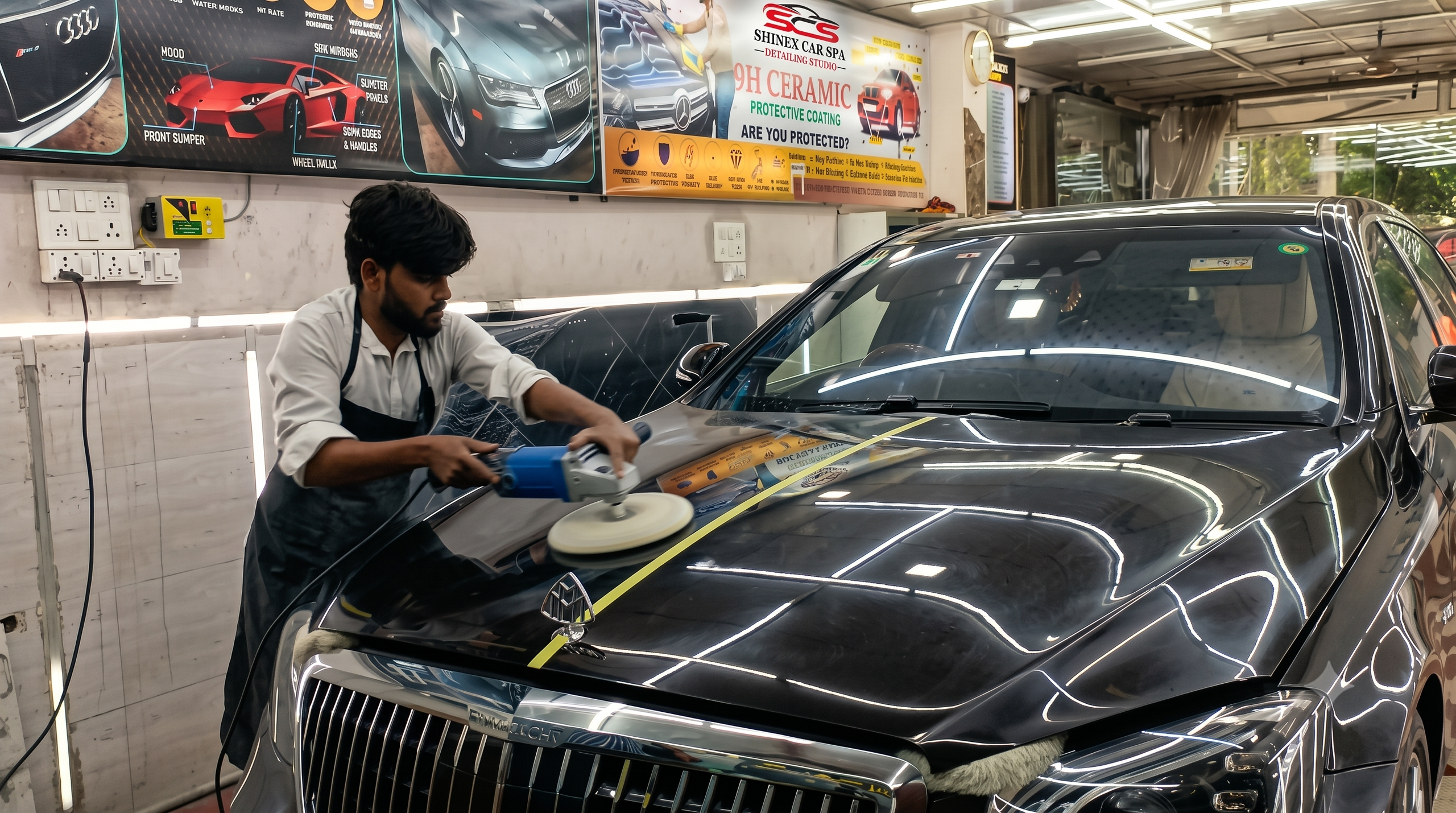
Car Detailing should restore your car’s appearance, improve its finish, and keep the paint clean and well maintained. But the wrong products, tools, or techniques can do the opposite—and sometimes leave your paint with scratches, swirl marks, water spots, or an uneven finish.
Your car’s exterior faces sunlight, dust, pollution, road grime, bird droppings, and other contaminants every day. That is why detailing needs more than simply washing and polishing the surface.
The same principle applies when you move from detailing to Paint Protection Film installation. If the paint isn’t properly cleaned and prepared, or if the installation is done incorrectly, the final result may not look as clean or be as durable as expected.
Whether you are detailing your car at home or looking for Paint Protection Film installers for professional protection, understanding these common mistakes can help you avoid unnecessary damage and expense.
5 Car Detailing Mistakes You Need to Avoid
1. Using a Clay Bar Without Enough Lubrication
A Clay Bar is useful for removing bonded contaminants that normal washing may not remove. These contaminants can include industrial fallout, overspray, and other particles stuck to the paint surface.
However, clay should never be dragged aggressively across a dry or poorly lubricated surface.
Without sufficient lubrication, friction between the clay and paint increases. This can lead to Clay Marring, which may leave the surface looking dull or hazy instead of smooth and glossy.
The safer approach is to:
- Wash and rinse the vehicle first.
- Use a suitable clay lubricant.
- Work gently over a small section at a time.
- Avoid excessive pressure.
- Check the surface regularly as you work.
A properly lubricated clay bar treatment can make the paint feel smoother and prepare the surface for polishing or protection.
2. Polishing Too Aggressively
Polishing is commonly used to improve paint appearance by reducing the appearance of minor imperfections such as light swirl marks, oxidation, and surface defects.
However, polishing is not simply about applying more pressure to achieve a better finish.
Machine polishing works by removing a controlled amount of the clear coat to level minor imperfections. Excessive correction, aggressive compounds, unsuitable pads, or poor technique can remove more clear coat than necessary.
Over-correction can reduce the remaining clear-coat thickness and may create uneven results if the process is not controlled properly.
That is why paint correction should be approached according to the actual condition of the vehicle. If you are unsure about the paint thickness or condition, professional inspection is a safer option than experimenting with aggressive polishing.
3. Washing With Dirty or Harsh Tools
The washing stage can have a major impact on the final appearance of your paint.
Using a dirty sponge, rough towel, or contaminated microfiber cloth can transfer particles back onto the paint. When those particles are rubbed across the surface, they can contribute to swirl marks and fine scratches.
Instead, use clean, soft microfiber Washing Tools and make sure they are properly maintained.
A good washing routine includes:
- Rinsing loose dirt from the vehicle before contact washing.
- Using clean microfiber wash mitts or suitable soft tools.
- Separating heavily contaminated tools from paint-contact tools.
- Rinsing the vehicle thoroughly.
- Using clean microfiber towels for drying.
- Avoiding excessive pressure while washing or drying.
This is particularly important if your vehicle already has a sensitive or recently corrected finish.
4. Treating Oxidized or Damaged Paint Like Healthy Paint
Not every vehicle needs the same detailing treatment.
If paint is heavily oxidized, faded, peeling, or otherwise compromised, treating it like healthy factory paint can create unrealistic expectations and potentially make the condition worse.
Polishing can improve certain types of oxidation and surface defects, but it cannot restore missing paint or repair severe clear-coat failure.
Before starting paint correction, inspect the surface carefully. Look for:
- Heavy oxidation
- Clear-coat failure
- Peeling or flaking
- Deep scratches
- Previous repainting
- Uneven paint condition
If the paint has severe damage, correction may not be the appropriate solution. In some cases, repainting or another form of professional repair may be necessary.
The key is simple: understand the condition of the paint before deciding what treatment it needs.
5. Washing Your Car in Direct Sunlight
Washing your car under strong direct sunlight may seem harmless, but it can make the detailing process more difficult.
When the panel is hot, water and cleaning products can evaporate quickly. If shampoo or rinse water dries on the surface, it can leave behind water spots or product residue.
Instead, try to wash your vehicle:
- In a shaded area.
- On a cooler surface.
- One section at a time when necessary.
- With products suitable for the vehicle’s paint.
- With thorough rinsing before the surface dries.
A controlled environment makes it easier to achieve a consistent and clean finish.
What About PPF Installation?
Car detailing and PPF Installation are related to vehicle appearance and paint protection, but they are not the same process.
Paint Protection Film, or PPF, is a transparent protective film designed to help protect painted surfaces from everyday road hazards such as minor scratches, stone chips, and environmental contamination.
If you are considering PPF Protection for Car, the condition and preparation of the paint matter before the film is applied.
Why Proper Preparation Matters
Before Car PPF Installation, the surface should be thoroughly cleaned and prepared. Contaminants left underneath the film can affect the appearance of the finished installation.
During installation, professional technicians use appropriate tools and techniques to position and secure the film. A Paint Protection Film Squeegee, for example, is used to help work the film against the surface and manage installation fluid while reducing trapped moisture and air.
However, using the right tool alone does not guarantee a good result. Film quality, surface preparation, technician experience, installation environment, and aftercare all matter.
This is why choosing experienced Auto Paint Protection Film Installers can be important when you are investing in PPF.
Common PPF Installation Mistakes to Watch For
If you are planning Car Paint Protection Film Installation, pay attention to the installation process as well as the film itself.
Common issues can include:
- Installing film over a poorly prepared surface.
- Leaving contaminants underneath the film.
- Poor alignment or cutting.
- Excessive stretching of the film.
- Improper handling of installation solution.
- Inadequate finishing around edges.
- Installing in an unsuitable environment.
For the same reason, installing PPF casually in a dusty home parking area is generally not ideal. Dust and airborne contaminants can interfere with the installation and become trapped between the film and paint.
A professional installation environment provides better control over cleanliness and application conditions.
How to Protect Your Car During the Detailing Process
Good detailing is not about using the strongest product or applying the most aggressive technique. It is about using the Right Process for the Condition of the Vehicle.
Here are some practical rules to follow:
Rinse Before Contact Washing
Remove as much loose dirt and grit as possible before rubbing the surface with a wash mitt or microfiber tool.
Use Clean Microfiber Tools
Microfiber is useful for washing, drying, and detailing because of its soft construction, but it still needs to be clean and properly maintained.
Inspect Before Polishing
Do not automatically polish every vehicle. First determine whether the paint actually needs correction and whether the clear coat is suitable for the intended treatment.
Avoid DIY Experiments on Damaged Paint
If the vehicle has severe oxidation, peeling clear coat, deep scratches, or uncertain paint thickness, professional assessment can help prevent unnecessary damage.
Prepare the Surface Before Protection
Whether you are applying wax, a ceramic coating, or preparing for PPF, surface preparation has a major effect on the final appearance.
If you are searching for PPF Coating for Car Near me, PPF Wrap Near me, or PPF for Cars Near me, look beyond the price and check the film specifications, installation process, warranty terms, preparation method, and installer experience.
How to Choose a PPF Installer
If you are ready for Paint Protection Film Installation Cost information, remember that price can vary depending on several factors, including:
- Vehicle size and model
- Coverage selected
- Film type and quality
- Installation complexity
- Paint condition
- Installer experience
- Warranty and aftercare
Someone searching for PPF Installer Near me or PPF Installation Near me should ideally compare the installation process rather than choosing purely on the lowest quotation.
You can also ask the installer:
- What PPF brand and series are being used?
- What areas will be covered?
- How is the paint prepared before installation?
- Is the film computer-cut or manually cut?
- What warranty is provided?
- How should the vehicle be maintained after installation?
- What happens if there are installation-related issues?
These questions can help you understand what you are actually paying for.
Final Things to Remember
Car Detailing should improve your vehicle’s appearance—not create another problem to fix.
The biggest mistakes usually come from rushing the process, using contaminated tools, applying excessive pressure, ignoring the condition of the paint, or using products without proper preparation.
Before washing, clay treatment, polishing, coating, or PPF Installation, take a moment to inspect the surface and understand what your car actually needs.
And if you are considering PPF, remember that Car Detailing and Paint Protection Film Serve Different purposes. Detailing focuses on cleaning, restoring, and maintaining the vehicle’s appearance, while PPF is designed to provide a physical protective layer over selected painted surfaces.
Whether you are searching for PPF Near me, comparing Paint Protection Film Installers, or simply trying to maintain your car yourself, the goal should always be the same: use the right process, the right tools, and the right level of treatment for your vehicle.
Frequently Asked Questions
There is no single schedule that works for every vehicle. It depends on how frequently the car is driven, where it is parked, the local environment, and its overall condition. Many owners benefit from periodic detailing every few months, combined with regular maintenance washing.
Polishing removes a small amount of the clear coat when used for paint correction. The amount depends on the product, pad, machine, technique, and number of correction passes. Excessive or unnecessary polishing can reduce clear-coat thickness, which is why paint correction should be performed carefully.
Yes, clay bar treatment can be safe when performed correctly. Adequate lubrication, light pressure, proper technique, and a suitable clay product are important. Using clay on a dry surface or applying excessive force can cause marring.
No. PPF is a physical film applied over the paint, while a ceramic coating is a liquid coating that bonds to the surface. PPF is primarily used for physical protection against road debris and minor impacts, while ceramic coatings are generally used for surface properties such as gloss, easier cleaning, and water behavior.
Check the film specifications, coverage, warranty, preparation process, installation environment, installer experience, and aftercare instructions. If you are comparing PPF Installation services, do not evaluate the quotation on price alone.